
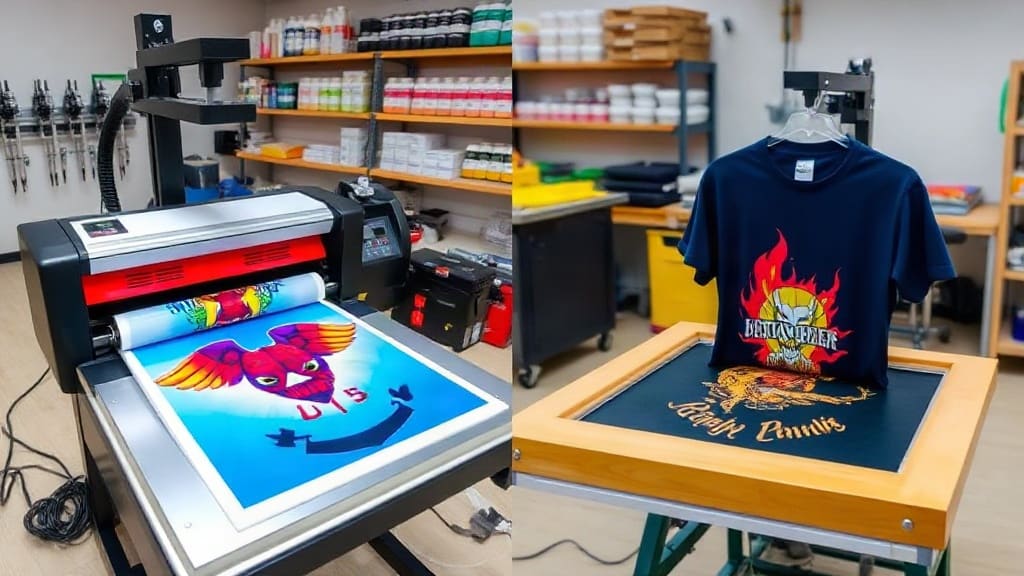
When it comes to custom apparel, the method you choose can make or break your product. For years, screen printing was the go-to for bulk orders, but now DTF (Direct to Film) printing is giving it a run for its money. If you're torn between these two techniques, you're in the right place. We'll break down everything you need to know, from cost and quality to turnaround times, so you can decide which one suits your business best.
What Is DTF Printing?
DTF printing involves printing your design onto a special film, then transferring it to fabric using a heat press and adhesive powder. It's a relatively new method that has exploded in popularity because it works on a wide range of materials, including cotton, polyester, blends, and even tricky surfaces like nylon. DTF transfers are known for their vibrant colors and soft hand feel, making them a favorite for detailed, full-color designs.
How DTF Works: Step by Step
- Print the design onto a PET film using a specialized DTF printer.
- Apply hot-melt adhesive powder to the printed side of the film.
- Cure the powder with heat so it binds to the ink.
- Cut the transfer to size (if not pre-cut).
- Place the transfer on your garment and press with a heat press at around 300°F for 15-20 seconds.
- Peel the film away, and you're done!
This process is straightforward, which is why many print shops have adopted DTF as an alternative to traditional methods. But how does it stack up against screen printing?
What Is Screen Printing?
Screen printing is a classic method where ink is pushed through a mesh stencil onto the fabric. Each color in your design requires a separate screen, which means setup can be time-consuming and costly. However, once the screens are made, the actual printing is fast and efficient, making it incredibly cost-effective for large runs. It's known for producing durable prints that can withstand hundreds of washes without fading.
The Screen Printing Process
- Create a separate screen for each color in your design.
- Expose the screens with your artwork.
- Set up the press and align the screens.
- Print each color layer by layer, using a squeegee to push ink through the mesh.
- Cure the ink with a conveyor dryer to ensure durability.
Because of the setup involved, screen printing really shines when you're producing hundreds of identical shirts. But if you're looking for flexibility and quick turnarounds, the scales might tip in favor of DTF.
Cost Comparison: DTF vs Screen Printing
Cost is often the deciding factor for small businesses. Here's a breakdown of what you can expect:
Setup Costs
Screen printing has higher upfront costs because you need to create screens for each design and color. A simple one-color setup might cost around $20-$30, but a complex multi-color design can run into the hundreds. In contrast, DTF transfers have virtually no setup cost. You just need the digital file and a printer, and you're ready to go.
Per-Print Costs
For large quantities, screen printing wins on per-unit cost. Once the screens are made, the ink and labor cost per shirt is very low, often pennies per print. DTF, on the other hand, has a higher per-print cost because you're using film, powder, and ink for each transfer. However, for small batches (say, 1-50 pieces), DTF is more economical because you're not paying for screen setup that gets amortized over a huge order.
If you're just starting out or you cater to customers who order in small quantities, DTF is your budget-friendly friend. If you're printing thousands of shirts for an event or a corporate client, screen printing will save you money.
Quality and Durability: What Lasts Longer?
Both methods produce high-quality prints, but there are differences in look and durability.
Color Vibrancy and Detail
DTF excels at reproducing complex, full-color images with gradients, shadows, and fine details. The ink sits on the surface of the film before transfer, so you get a sharp, vibrant result. Screen printing, while excellent for bold, flat colors, struggles with photographic details unless you use simulated process printing, which adds extra screens and cost.
Hand Feel and Stretch
One common complaint about screen prints is that they can feel thick and rubbery, especially with heavy ink deposits. DTF prints are thinner and more flexible, giving them a softer hand feel that many people prefer. They also stretch well without cracking, making them ideal for athletic wear.
Washability
Screen printing is legendary for its durability. A properly cured screen print can last for years without fading. DTF prints are also durable, but they may show signs of wear sooner if not pressed correctly or if the garment is washed aggressively. That said, with proper care, DTF transfers can easily withstand 50+ washes.
For most applications, both options will satisfy your customers. If you're producing items that will see heavy use and frequent washing, screen printing might be the safer bet. If you want a soft, vibrant print that looks great on a variety of fabrics, DTF is hard to beat.
Turnaround Time and Flexibility
In today's fast-paced market, speed is crucial. DTF printing offers incredible flexibility. You can print a single shirt or a hundred without any extra setup. There's no minimum order, and you can produce DTF transfers on demand, which means you can hold inventory of transfers and print them onto garments as orders come in. This is a game-changer for businesses that offer custom products without keeping a large stock of printed shirts.
Screen printing, by contrast, requires a minimum quantity to be cost-effective. Setting up screens for a single shirt is impractical, both in terms of time and money. If a customer needs 10 shirts with different designs, screen printing would be a nightmare, while DTF handles it with ease.
Design Changes
With DTF, you can change your design as often as you like without any additional cost. Just edit your file and print. Screen printing requires you to reclaim and recreate screens for every change, which adds time and expense. This makes DTF ideal for test marketing and limited editions.
Fabric Compatibility
Screen printing works best on cotton and cotton blends. Polyester can be tricky because it requires special inks and careful curing to avoid dye migration. DTF, on the other hand, adheres well to virtually any fabric, including 100% polyester, nylon, leather, and even canvas bags. This versatility opens up a whole range of products you can offer, from polyester sports jerseys to delicate blends that would warp under screen printing's high heat.
Environmental Impact
Sustainability is becoming a major concern for consumers. Screen printing uses a lot of water for washing screens and can produce chemical waste. DTF printing is more eco-friendly because it uses less water and produces minimal waste. The film and powder are the main consumables, and while they aren't biodegradable, the overall environmental footprint is smaller. If you're marketing to eco-conscious customers, highlighting DTF's lower impact could be a selling point.
Which One Should You Choose?
There's no one-size-fits-all answer. Your choice depends on your business model, budget, and the types of orders you typically receive.
Choose DTF If:
- You handle small to medium orders (1-100 pieces).
- You want to offer full-color, detailed designs without extra setup.
- You need fast turnaround and the ability to print on demand.
- You work with a variety of fabrics, including polyester and blends.
- You're a startup or small business looking to minimize upfront costs.
Choose Screen Printing If:
- You consistently get large orders (100+ pieces) with the same design.
- Your designs are simple with few colors (1-4 colors).
- You need the most cost-effective per-unit price for bulk.
- You prioritize maximum durability for heavy-wear items.
Many successful print shops actually offer both services. They use screen printing for big jobs and DTF for the flexibility of small orders and prototypes. That way, they never turn away a customer.
Common Questions About DTF and Screen Printing
Can DTF transfers be used on dark shirts?
Absolutely. In fact, DTF is excellent for dark garments because you can print a white underbase layer directly onto the film. This ensures vibrant colors without needing a separate white underbase like in screen printing.
How long do DTF transfers last?
With proper care, DTF prints can last as long as screen prints. The key is to use high-quality materials and follow the correct pressing instructions. Most DTF transfers will withstand 50 or more washes without significant fading or cracking.
Is DTF printing more expensive than screen printing?
For short runs, DTF is more cost-effective because there are no setup fees. For long runs, screen printing becomes cheaper per unit. It really depends on the quantity and complexity of your order.
What equipment do I need to start DTF printing?
You'll need a DTF printer (which can be a converted Epson or a dedicated DTF machine), heat press, PET film, adhesive powder, and DTF inks. The initial investment can be a few thousand dollars, but it's much lower than setting up a screen printing shop.
Can I sell DTF transfers to other businesses?
Yes! Many entrepreneurs sell DTF transfers to other print shops or individuals who want to press their own garments. This is a great way to generate passive income since you can produce transfers in bulk and ship them anywhere.
Final Thoughts
Both DTF and screen printing have their place in the custom apparel industry. DTF offers unmatched flexibility, vibrant colors, and ease of use, making it perfect for small to medium orders and businesses that value agility. Screen printing remains the champion of large-volume production, delivering unbeatable cost efficiency and legendary durability. By understanding the strengths of each, you can make an informed choice that aligns with your business goals. And if you're ever in doubt, remember that you can always offer both to your customers, giving them the best of both worlds. So, what's your next move? Whether you're printing one shirt or a thousand, the right method is out there, and now you know exactly how to find it.